
Day 3 · Ninh Binh
After breakfast at the hotel, I’m picked up and taken to the bus that will take us to Ninh Binh, about two hours from Hanoi.
On every tour we are accompanied by a guide who shares a lot of history with us and explains what we’re going to see. Today we have three activities planned.
The first is a visit to the Dên thờ vua Đinh – Hoa Lư temple, located beside a beautiful lake surrounded by mountains. The place is truly stunning.
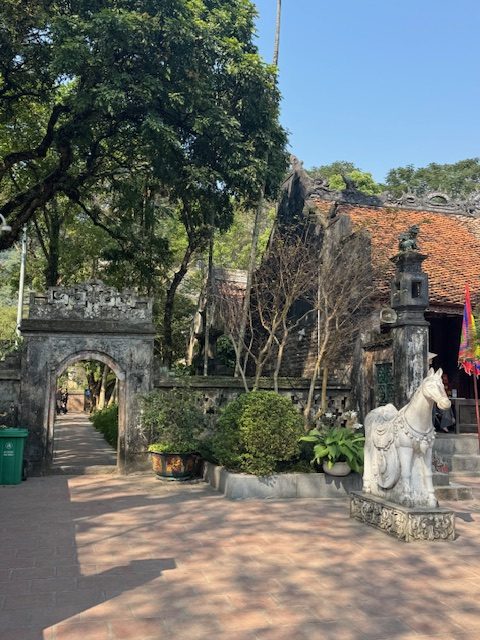
There is, however, a moment that leaves a bitter taste: a buffalo, decorated with a flower, approaches the entrance with its owner so tourists can climb onto it and take photos. Of course, the biggest guy in the group did just that. I couldn’t help but say out loud what I was thinking. Imagine the daily life of that poor animal… no words. Let’s be conscious: animals are not tourist entertainment.
Alexandra is a very lovely Canadian. Or, as Meryl Streep once said about Ryan Gosling: “like all nice people on the planet, he’s Canadian.” We admire the temple together while sharing a lovely conversation.
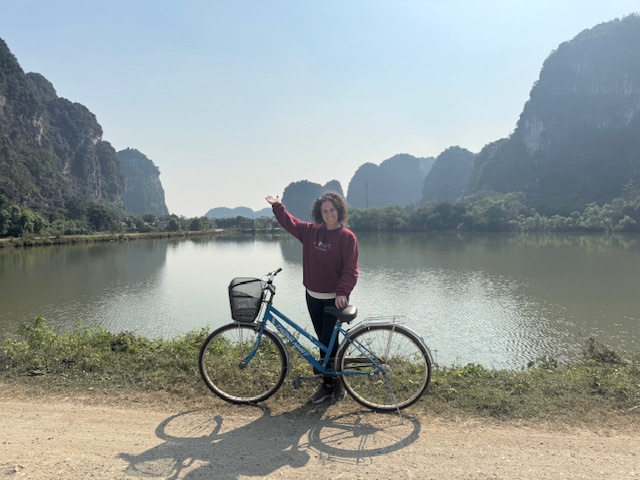
When we arrive at the restaurant where we’re going to have lunch, the second activity begins: a bike ride through lakes and the small village, surrounded by those beautiful mountains. A very peaceful place that I absolutely loved.
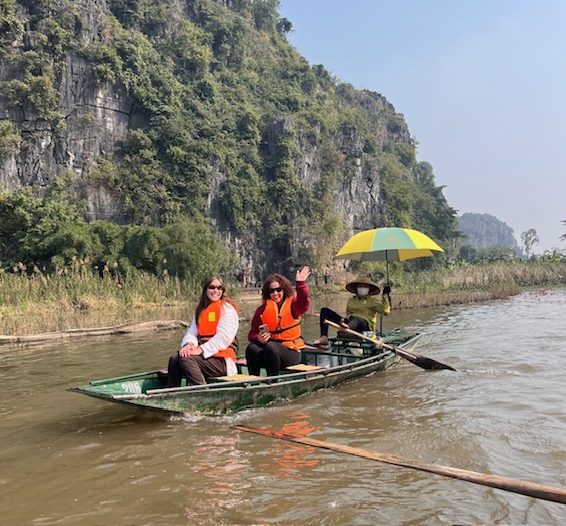
After a rich and abundant meal (with vegan options as well), we head to the Tam Cốc – Bích Động River, where small boats are waiting for us for a one-and-a-half-hour ride. Green waters, mountains, vegetation, wildlife, caves, and the sound of the oars. Only two people are allowed per boat; Alex and I go together, continuing our conversation while enjoying the scenery and the sense of calm.
The funniest part of the ride is watching how the rowers handle the oars… with their feet! Yes, they only use their hands to get out of the boarding area. Incredible.
As the final activity of the day, we visit an area of rice fields already harvested, from where you can climb two mountains via endless steps: the Lying Dragon Mountain and the Pagoda Mountain. From Hang Múa, we can admire the river we’ve just navigated; the views from the top are spectacular.
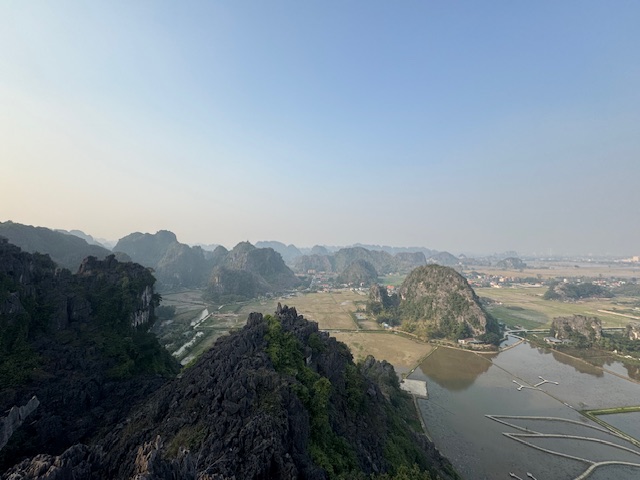
We return to Hanoi with happy hearts.
Day 4 · Hanoi
I have the whole day in Hanoi before boarding a sleeper bus to Sapa tonight. So I head out to walk and discover the Opera district, some areas with high-end department stores, and the Hoa Lo prison area.
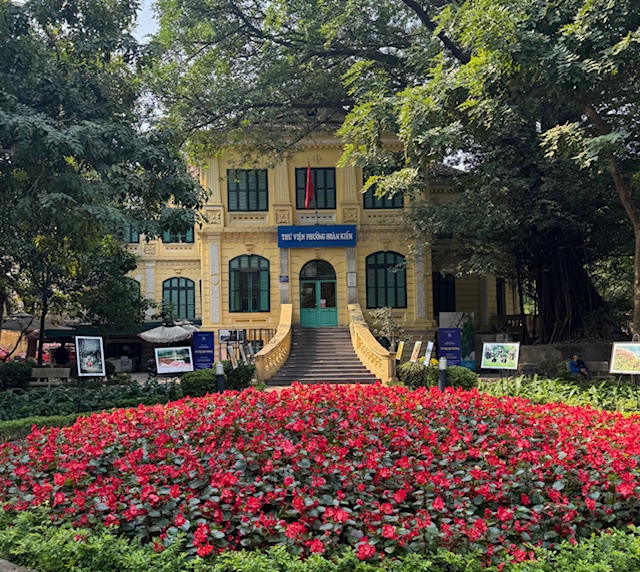
I visit the cathedral and, very close by, the library, which has a photography exhibition about Vietnam in its gardens. In front of it stands the beautiful police station, and a couple of streets away, the striking Uniqlo building; if you like the brand, it’s cheaper there. It stands by the lake near my hotel, and I think about what Hanoi means: a city within the river.
I’m wearing a shirt and jeans, but today the temperature is more than mild. I’m a bit hot and tired of wandering, so I go to my refuge. Today’s refuge is the original café (of the five in Hanoi): I’m going to have a Marou chocolate at Tranquil Coffee, which I reach through an alley I almost miss.
I’m in no hurry. I enjoy being here reading, and I tell myself that you don’t have to see or do everything. That thought brings me peace when I travel, because it’s true.
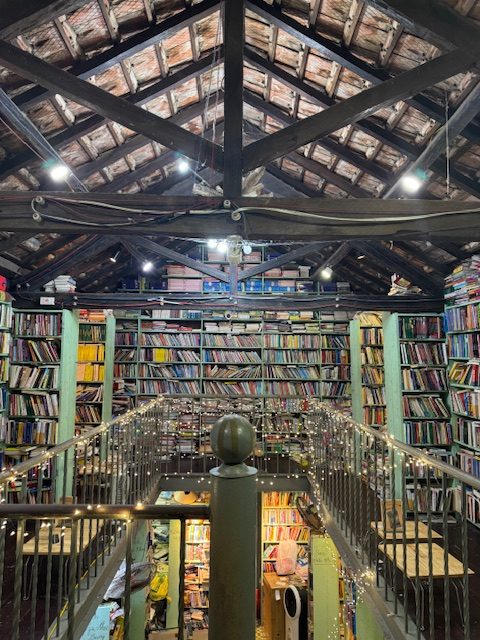
I go in search of Ethic Travel, a travel bookshop where all the books are wrapped in plastic. I walk around the lake, which on weekends hosts a market and is closed to traffic: children play, people stroll, and I look for the oldest bookstore in the city, Nhà sách Mão. I find two, but not the one I’m looking for, until a bookseller points me toward a small alley. Of course—it’s well hidden.
It reminds me of Daunt Books in London, with its small upper-floor balcony. Books are scattered throughout every corner, and there’s a scale to sell them by weight. It’s a charming place—such a shame I don’t read Vietnamese.
LITERARY NOTE
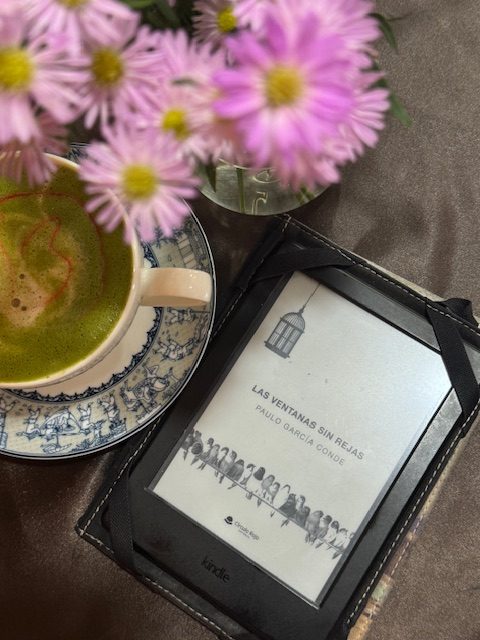
This journey, made up of slow walks and shared routes, also gifted me time for reading. One of the books that accompanied me was the second novel by a Spanish writer I know and deeply admire for the way he writes: Ventanas sin rejas, by Paulo García Conde.
The story begins with Miquel waking up in a psychiatric hospital after an accident, institutionalized against his will. From there, the novel delves into the human psyche, moving through that fragile territory where freedom and its absence blur, where reality becomes porous and certainties begin to crack.
It is a book that does not judge, but observes. One that focuses on the humanity of its characters—on compassion, empathy, and the fractures we all carry. A book that accompanies you, that unsettles you at times, and that, without raising its voice, leaves a lasting mark.
Perhaps that is why it fit this journey so well: because, like Vietnam, it invites you to look slowly and to understand that not everything needs to be explained in order to be felt.