
I arrive at my final destination in Vietnam, the city we knew for years as Saigon, the epicenter of one of the most devastating conflicts of the 20th century. In 1975, after the fall of the pro-American regime, it was renamed Ho Chi Minh City in honor of the leader who pushed for the country’s reunification.
The name Saigon became popular during the French occupation of Cochinchina—yes, that place we use in Spain as a synonym for “very far away”—which was actually southern Vietnam.
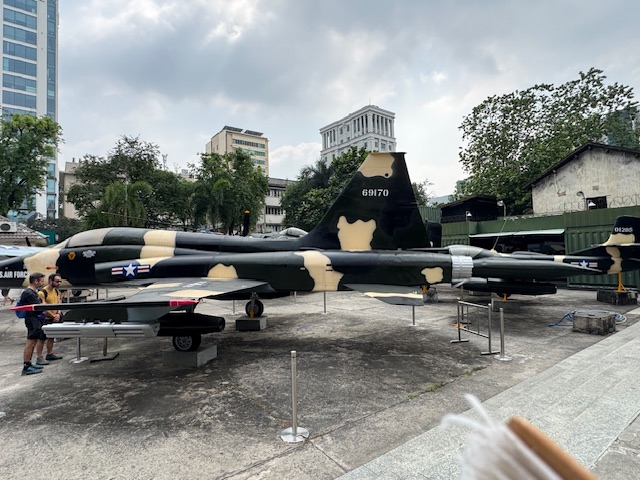
As soon as I arrived, I went straight to the War Remnants Museum, which I had heard so much about. I spent several hours there reading the panels, looking at photographs, and walking through rooms filled with tanks, planes, and uncomfortable memories. I left quite shaken. For some reason, I hadn’t fully grasped the magnitude this conflict had reached, known there as the “American War.”
The torture, the use of chemical weapons like Agent Orange, the experiments… it’s all difficult to process. All of it supported by a country that has spent years trying to clean up its image through films and TV series, without fully succeeding, as is being shown once again in the times we are living through. It’s one of those places that forces you to stop, to look carefully, and to try to understand, even just a little, what happened.
But Ho Chi Minh is not just memory. It’s also chaos, life, endless motorbikes, and an energy that contrasts with the weight of its history.
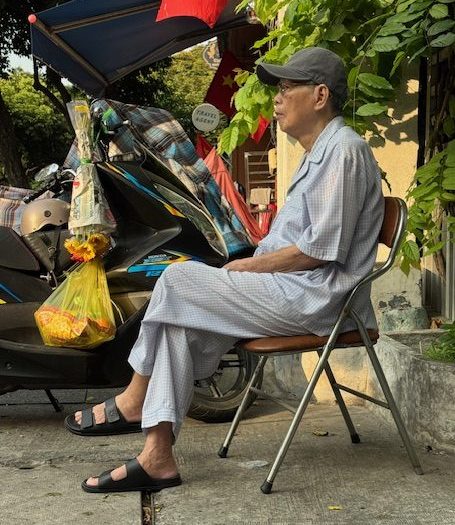
My homestay, Misa House, is small, very clean, with a spacious room and a kitchen. It’s located in a small alley, so the next morning I’m picked up there for a city tour. While I wait, I sit on a small chair on the street and greet with a slight nod a man I’ll see every morning, always sitting in the same spot, serious and dressed in what looks like pajamas.
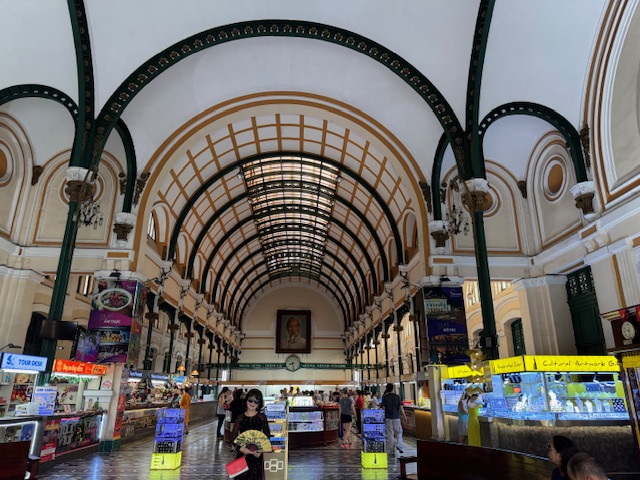
The tour starts at the cathedral, the Vietnamese Notre Dame. The French wanted to turn Saigon into a “little Paris,” but since it’s completely covered for restoration, we can’t admire it as we would have liked. Right next to it is the Central Post Office, which I had already visited the day before. I went back anyway, because I loved the idea of buying postcards and sending them like in the old days.
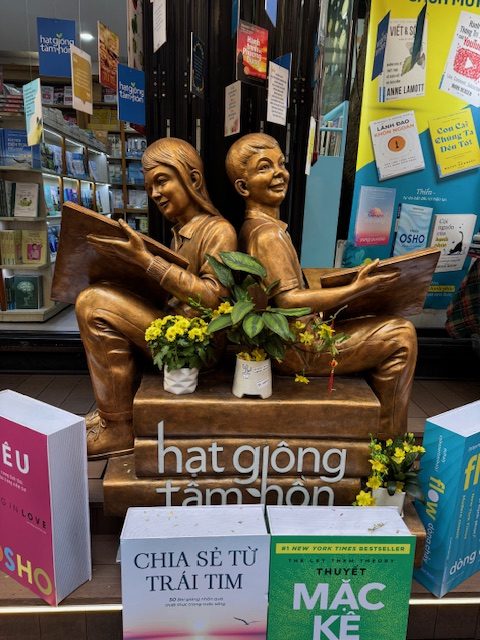
Book Street, right next to the post office, is a place that invites you to stay. When the tour headed to the War Museum—which I had already visited—I decided to go back there instead. I sat in a café with a book I bought in one of the small shops and waited calmly for the group. I was glad I had visited the museum the day before, because I wanted to take my time, and tours don’t allow for that.
From the Post Office, you can also see the building where the last American helicopter landed at the end of the war, an image that marked the closing of an era.
Our guide is a true fountain of knowledge, which made the visit to the Reunification Palace much more interesting. Every room, every corridor, every bunker comes to life through his explanations.
When we left, I realized why there were so many girls—and some boys—taking photos in iconic places around the country. It was Lunar New Year, similar to Chinese New Year, and it was the Year of the Horse. The photos were part of the celebration.
In the afternoon, we visited the Cu Chi Tunnels, the longest in the world with more than 250 km. After seeing projectiles and remains of weapons, we walked through the jungle until we reached one of the entrances. There, a young man showed us how to get in and out without being detected—I even volunteered to try it myself.
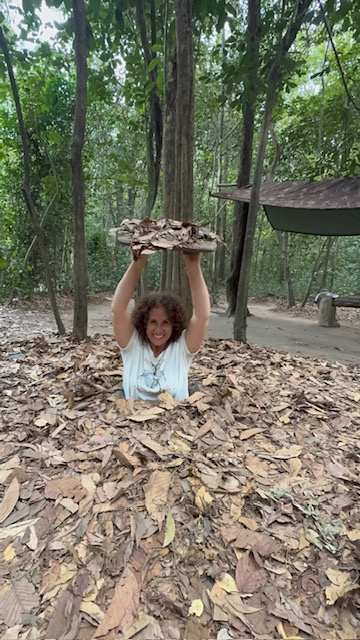
The ventilation openings were camouflaged as termite mounds. In the kitchens, they had several ducts, but they only cooked at dawn or dusk, when the little smoke that came out could be mistaken for the natural mist of the area when seen from above.
They showed us different types of traps. They recycled everything—pieces of bombs, debris… anything could become a defensive tool.
We entered the tunnel. I still find it incredible that people were able to live down there.
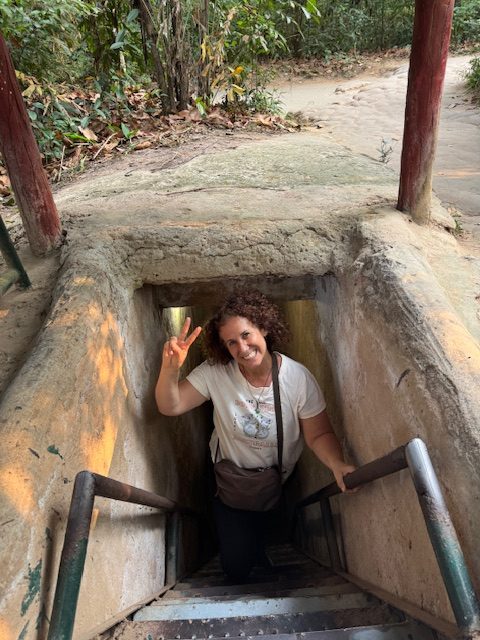
They even used bomb craters to build more tunnels, as those holes helped collect water.
Their diet was mainly based on tapioca with a kind of salt. Since it was grown underground, it was less exposed to contamination.
Their ingenuity left me truly amazed. It was a people fighting for their freedom: men, women, young, old… everyone, for more than 19 years.
LITERARY NOTE
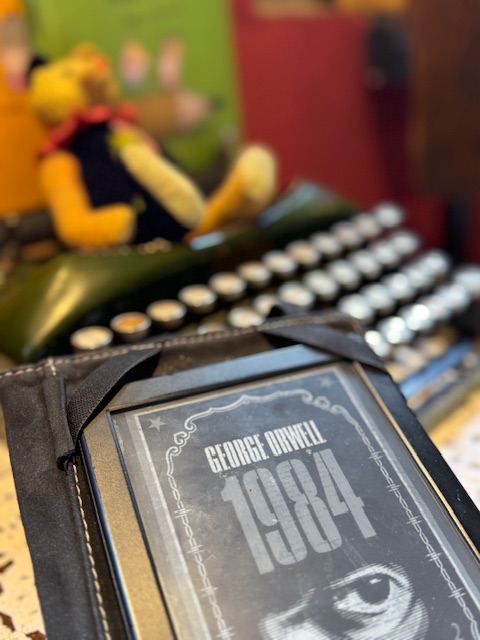
During these days, I couldn’t help but think about 1984 by George Orwell. A book about control, manipulation, and how narratives are constructed until they become “truth.”
After visiting the War Remnants Museum and the Cu Chi Tunnels, that feeling becomes even stronger. History is not always told the same way depending on who tells it, and there are versions that, for years, are pushed over others.
Maybe that’s why being here is so impactful. Because you stop reading about it in a book or watching it on a screen, and you begin to understand that behind everything there are real people, real lives, and real consequences that cannot be edited or softened.