
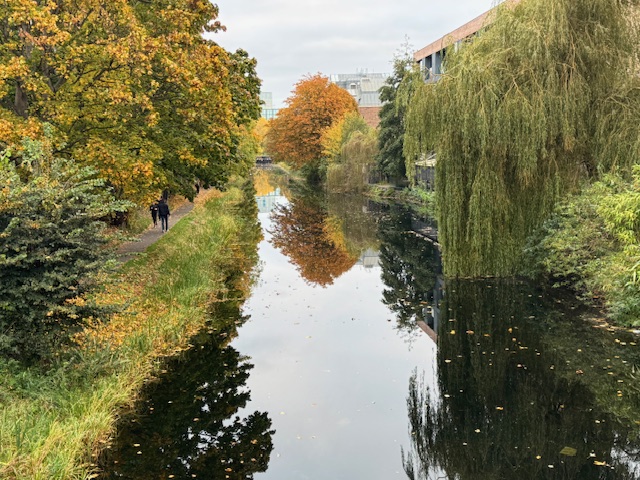
I arrived in Dublin in the midst of autumn, surrounded by its vibrant colors that filled me with joy as I walked toward the city center to soak them in. I admired the quintessentially Dublin buildings, with their colorful doors, charming store fronts and iconic pubs that have travelled the world and are here to stay.
A small stream winds through part of the city, lined with trees, captivating me with its golden hues and magic.
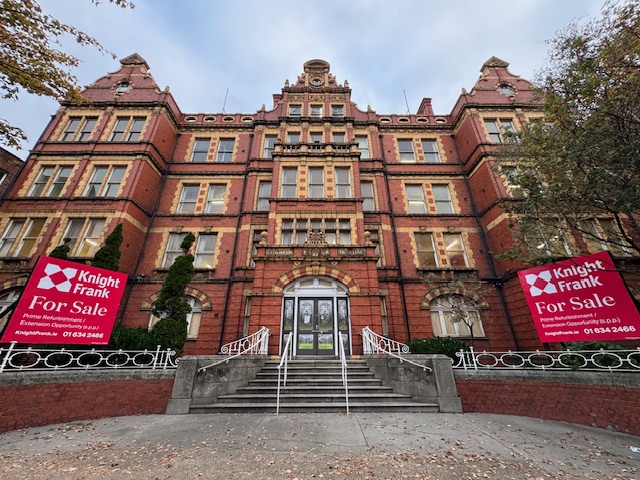
I admired a beautiful building for sale, the Royal City of Dublin Hospital. Founded in 1832 by a somewhat “rebellious” doctor determined to create a hospital that also accepted patients with limited means, its facade looks more like an elegant hotel than a hospital: he wanted those entering to feel they were not going to a place of suffering. It closed in 1986, but Dubliners fought to prevent its demolition; today it is preserved as a protected building, a symbol of the city’s spirit of solidarity.
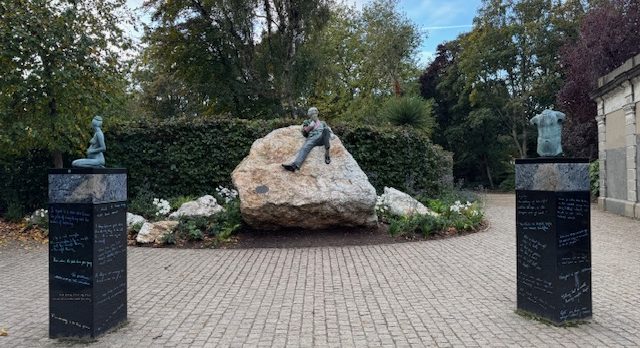
The climate here allows for lush green parks in the heart of the city—small oases of beauty, especially in autumn. I crossed Merrion Park and in one corner found a statue honoring perhaps the country’s most famous writer: there, striking his characteristic pose atop a rock, stands Oscar Wilde.
Across from that corner, at 1 Merrion Square, is his birthplace and childhood home, where he lived with his parents. William, his father, was an ophthalmic surgeon, and his mother, Agnes, a poet and advocate of Irish nationalism, wrote under the pseudonym Speranza.
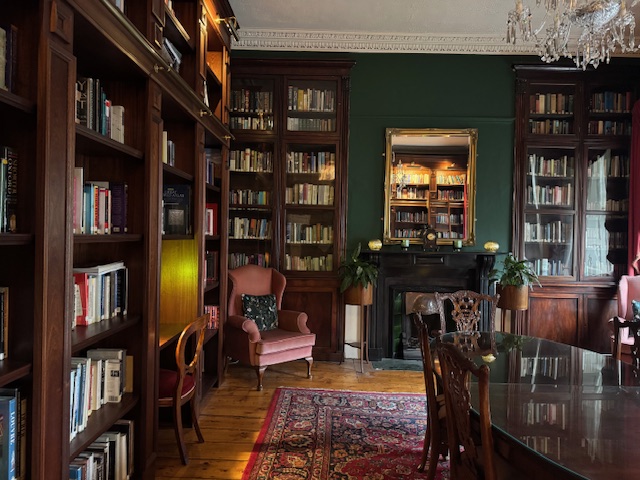
Vibrant, brilliant, and a lover of languages, Wilde studied at Trinity College, a must-visit for any lover of books and culture. The sun shone (yes, a surprise) as I strolled across the campus, admiring its magnificent buildings. At the appointed time, I headed to see the crown jewel of the place.
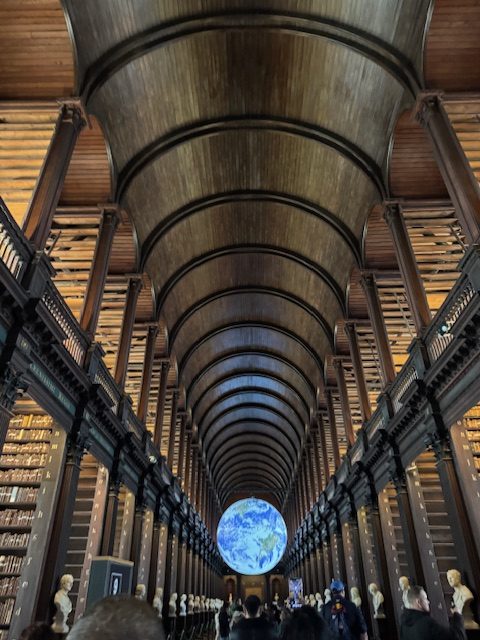
The library and the Book of Kells can be visited via a guided tour. I was overwhelmed with emotion entering this library, which I had longed to see for so many years: its towering shelves filled with books, the busts of great thinkers—including, recently, four distinguished women—and a large globe seemingly floating from the ceiling, giving the impression of entering a universe of its own where I could happily stay forever.
In the Long Room, you can also see the Brian Boru harp, the oldest Irish harp and a national symbol of Ireland.
The Book of Kells, an illuminated manuscript created by Irish monks around 800 AD—likely in a Scottish monastery—made its way to Ireland following Viking raids. We are fortunate that it survived those turbulent times. It contains the four Gospels and is decorated with astonishingly beautiful colors and details. Only two pages are displayed at a time, rotating for conservation purposes. The dimly lit room envelops you and transports you back in time to those patient hands that penned such intricate and beautiful letters.
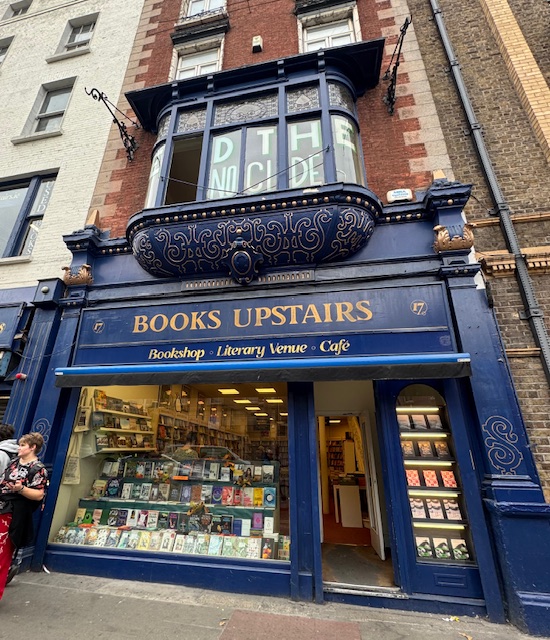
I feel that if I had to leave the city now, I would do so fully content. But that won’t be the case—there is still so much to see and enjoy. Before continuing, I make a stop. Can you guess where? Yes: at a book café. Just two minutes from the university is Books Upstairs, Dublin’s oldest independent bookstore.
Upstairs is a café, with beautiful windows framing the view. Its atmosphere invites you to linger, open a book, or write. Some tables allow laptops; others, by explicit instruction, do not. I love that detail.
I decide this will be my Dublin refuge.
Across from International Books, near the university, is where I go for breakfast. Brewbaker Café has become my trusted spot: Connor, the owner—more Irish impossible—and his staff are friendly and prepare delicious vegan treats.
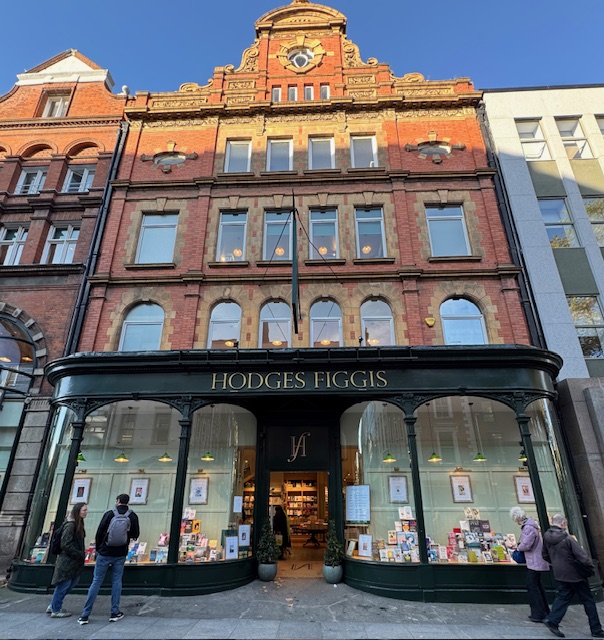
I stroll through the streets, falling in love with every corner. I pass the massive Hodges Figgis bookstore, reminiscent of London’s Hatchards. Nearby is Ulysses Rare Books, a charming second-hand bookstore.
Just behind is the busy and famous Grafton Street, where a few wonderful singers delight passersby with their music. The ones I listened to were so talented… simply impressive.
At the end of the street is a bright and lovely shopping arcade: Stephen’s Green, with its glass walls and roofs and a large clock that gives a romantic touch to all the little shops it houses.
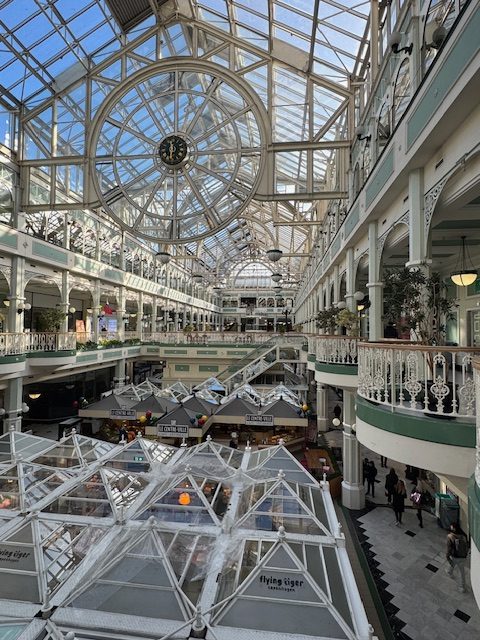
Here, too, you can find “so and so lived here” plaques, and I pass by the home of Bram Stoker, the Irish writer and author of Dracula.
Nearby is the park of the same name as the arcade, Saint Stephen’s Green Park. So romantic: the trees reflect in the lake, swans rest, oblivious to the noise and pace of our lives.

By another entrance to the park, I visit the Museum of Literature, enjoyable, simple, and very illustrative.
Literary Note
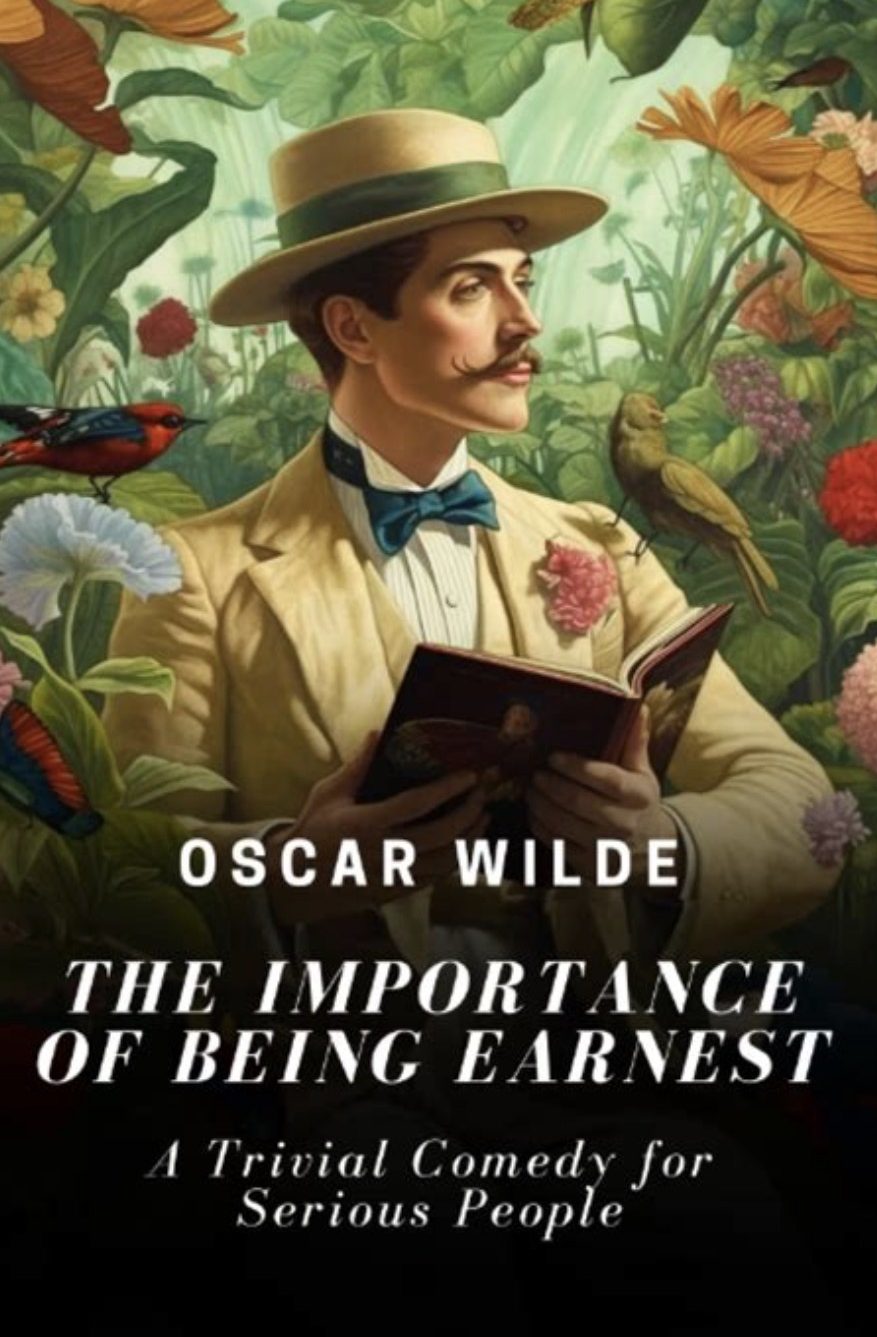
This first Irish post has many literary touches, which I love. I adore this city; I could easily imagine living here. The book for today couldn’t be any other than The Importance of Being Earnest by Oscar Wilde.
This comedy of manners, which I read at university and which was written at the end of the 19th century, is a perfect example of Wilde’s wit and irony. The story revolves around two young men who adopt false identities to live as they wish, and the misunderstandings and confusions that ensue. With brilliant dialogue, biting satire, and subtle critique of social conventions of the time, the play pokes fun at the pretensions of Victorian high society while entertaining with elegant, timeless humor.
It is a book to enjoy for both its sharpness and its lightheartedness, fitting perfectly into a literary stroll through Dublin, the city that gave birth to Wilde, whose elegance and humor seem reflected on every page.
During the October days I was in Dublin, Oscariana, a festival in honor of Oscar Wilde, was taking place.