
Day 5 – Sapa: Cat Cat Village and Mount Fansipan
Cat Cat Village, Sapa
We arrived in Sapa at dawn on a sleeper bus. A van took us to the hotel, and as soon as we entered, we found the reception deserted… and a young man sleeping on the sofa. It turned out to be the receptionist. Just to show how safe the place is: a phone kept lighting up with messages while he slept peacefully.
We dropped off our backpacks and went downstairs for breakfast at the hotel. The sunrise views were beautiful. It was the only cold day of the whole trip, and the mist kissed the mountains, creating an almost magical scene.
Our guide, who looked like a real mountain sherpa with her traditional skirt, tall socks, and handmade bag, came to pick us up to take us to Cat Cat Village. We descended a stepped street to a large clearing with wonderful views of the terraced rice fields.
There, I found something that reminded me of Bali: swings, hearts, and structures designed for social media photos. Among small souvenir shops, we reached the little village, crossed by a river, with local craftswomen sewing, cafés, and restaurants.
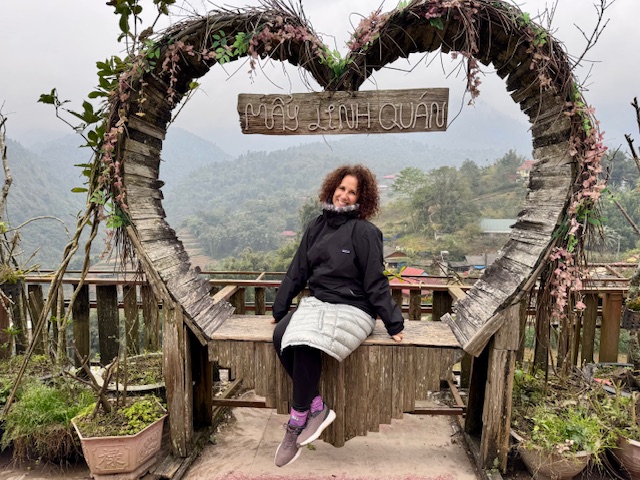
At 11:00 a traditional dance was performed for us from a terrace. Many visitors dressed in traditional costumes to take photos (and some locals too, since the Lunar New Year was approaching).
Unfortunately, we also saw two decorated horses for tourists to ride and take pictures. One of them lay down, exhausted, and shortly after, its owner urged it to get up because more people were coming for the perfect photo—which would have been even prettier if the horse were free, grazing peacefully by the river.
Opinion about Cat Cat:
It’s pretty, yes, but clearly made by and for tourists. If you don’t have much time in Sapa, I might skip it. In the following days, we visited real villages, much more authentic.
Mount Fansipan: The Roof of Indochina
What I wouldn’t miss for anything is climbing the highest mountain in the country: Fansipan, known as the Roof of Indochina (region including Vietnam, Laos, and Cambodia).
It is simply spectacular. In certain seasons, you can even find snow at the summit.
I went to the new and beautiful train station (hard to find because it’s inside a yellow hotel). From there, a funicular connects to a very long cable car that literally passes through the clouds, taking us to an impressive Buddhist complex with temples and a giant Buddha overlooking the valley.
Important: from the Buddhist complex, you’re still not at the summit.
To reach the highest point, you need to take another funicular that covers the final steep stretch. You can also climb the last steps on foot if your body (and the fog) allows it.
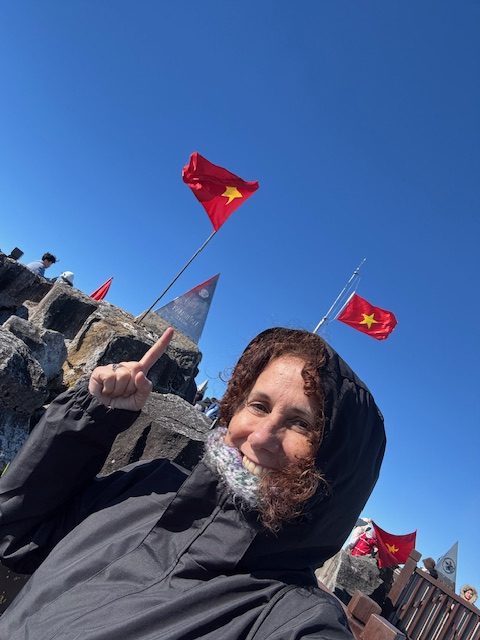
At the top, the wind is strong, the air colder, and the feeling of touching the sky is real. In certain seasons, you can even find snow. I am officially at the highest point of Indochina… and I feel it in every gust of wind.
Traveler tip:
Even if it’s not very cold down in Sapa, at the top of Fansipan the temperature changes completely. The wind is strong and the wind chill drops significantly, so bring warm clothes or at least a good windbreaker. I was very glad to have an extra layer.
Practical tip — Hours and prices (approximate):
Approximate schedule: the cable car normally operates from morning until mid-afternoon (usually starting around 8:00 a.m. and closing between 4:00–5:30 p.m., depending on the day).
Approximate prices (2026):
- Round-trip cable car: about 800,000–850,000 VND per adult and 550,000 VND per child.
- Funicular to the summit (optional): about 150,000–170,000 VND (one-way). Check exact times on the day of your visit, as they may change depending on the season and weather conditions.
Day 6 – Trekking through the Muong Hoa Valley and Hmong Villages
After a very good night’s sleep and feeling warm, and after a delicious breakfast, another guide picked us up and we set off. We were in for terraces of rice, dirt paths, small forests, and all the surprises the valley wanted to give us.
Some of my travel companions were Cliff and his wife Gilly, with whom I shared great conversations and lots of laughter during the hike.
The excursion was about 10–12 km, with uphill and downhill stretches. It seemed quite easy to me, but if you have any knee problems it could be a bit more challenging, especially if the terrain is wet.
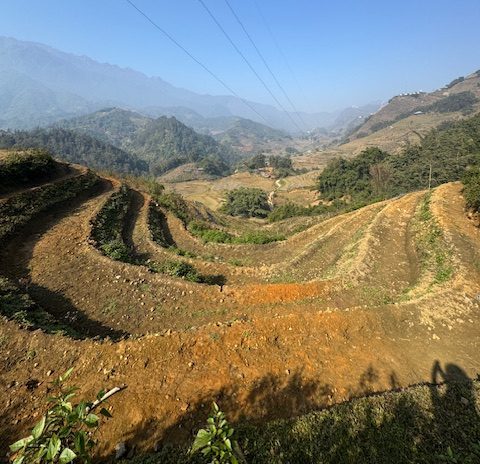
The day dawned sunny, with an ideal temperature. We walked through the magical Muong Hoa Valley, one of the most beautiful landscapes in northern Vietnam.
We arrived at Lao Chai, where some children greeted us with handmade bracelets. We passed through Hmong villages, observing their daily life among rice fields and wooden houses, until we reached our final destination: Ta Van.
There we ate and stayed overnight with wonderful views of the mountains and endless rice terraces—a perfect place to rest both body and mind.
Day 7 – Second day of trekking – Bamboo forests and valley villages
Another beautiful day dawned in the valley. After breakfast, we set off toward Giang Ta Chai.
Today my hiking companions were Kai and Rachel. We crossed a small stream and entered a beautiful bamboo forest near Su Pan. To avoid falling, I grabbed bamboo stalks as if I were Tarzan swinging from vine to vine. Lots of laughs!
We continued descending until we reached a small waterfall with a natural pool. Without hesitation, Rachel went into the water in her bikini. The water was cold, but the moment was worth it.
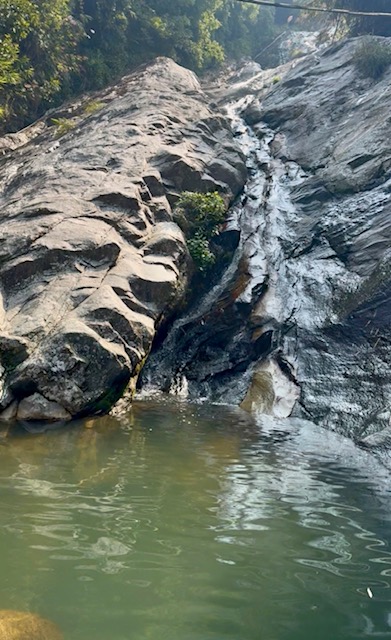
We continued to another small village where we stopped for lunch and met up with Cliff and Gilly. This was also where the van picked us up to return to our hotel in Sapa, closing two wonderful days of hiking through the valley.
Along the way, we met other travelers; we shared stories, impressions of the places visited, recommendations… and that special connection that only forms when you walk together for hours among mountains.
How beautiful it is to travel like this.
Travel tips – Trekking in Sapa
Footwear:
If you don’t have hiking boots, good sneakers with a grippy sole are enough, as long as the terrain is dry. If it has rained, the ground can be muddy, and then more technical footwear is useful.
Clothing:
If the weather is good, a short-sleeve shirt is perfect for hiking since your body warms up quickly. Also bring a light jacket or windbreaker, although it will probably end up tied to your backpack (as it did for me most of the trip).
Mosquito repellent:
Essential for enjoying the terrace at sunset in rural accommodations. Mosquitoes appear as soon as the sun goes down.
What to carry in your backpack (minimal and practical):
I left my suitcase at the Sapa hotel and only took:
- Underwear
- A clean t-shirt
- The jacket
- A mini toiletry kit
After all, you have to carry it all for two days, and you don’t need much to feel like Heidi among the rice fields
Literary note
These three days in Sapa left me with a mix of sensations: the magic of the terraced rice fields, the authentic life of the Hmong villages, and the vastness of the mist-covered mountains. Although there are touristy spots like Cat Cat, walking along the valley trails, sharing stories with other travelers, and feeling the earth under my feet made it all worthwhile.
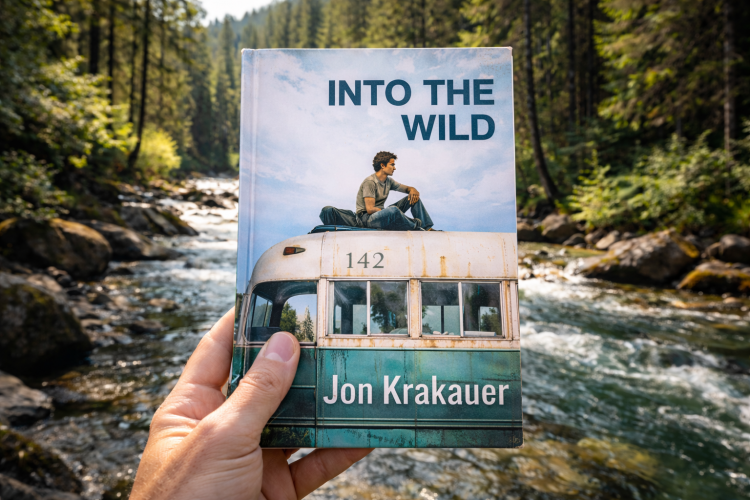
In the end, it’s not just about climbing Fansipan or seeing the waterfall, but about living each step, each encounter, and every moment of tranquility among the mountains, taking home memories that truly resonate. It reminded me of “Into the Wild” by Jon Krakauer, which tells the story of Christopher McCandless, a young man who leaves society and his comforts to explore the wild corners of North America in search of freedom and self-discovery. In his backpack, he carried as his only companions books by authors like Thoreau, John Muir, and Edward Abbey, which guided and inspired him in his connection with nature. McCandless’s experience reflects the same feeling I had hiking in Sapa: venturing without a fixed path, letting each trail surprise you, and discovering that every path has its own story, and that sometimes losing yourself is the best way to find yourself.